
Every year, hundreds of thousands of people around the world sign up for the CrossFit Open. Some do it to qualify for the next stage of competition. Most do it to test themselves, connect with their community, and see what they are capable of.
But beyond the excitement and leaderboard refreshes, there is a deeper question: Is there a real, science-backed reason to sign up?
Yes. In fact, there are many.
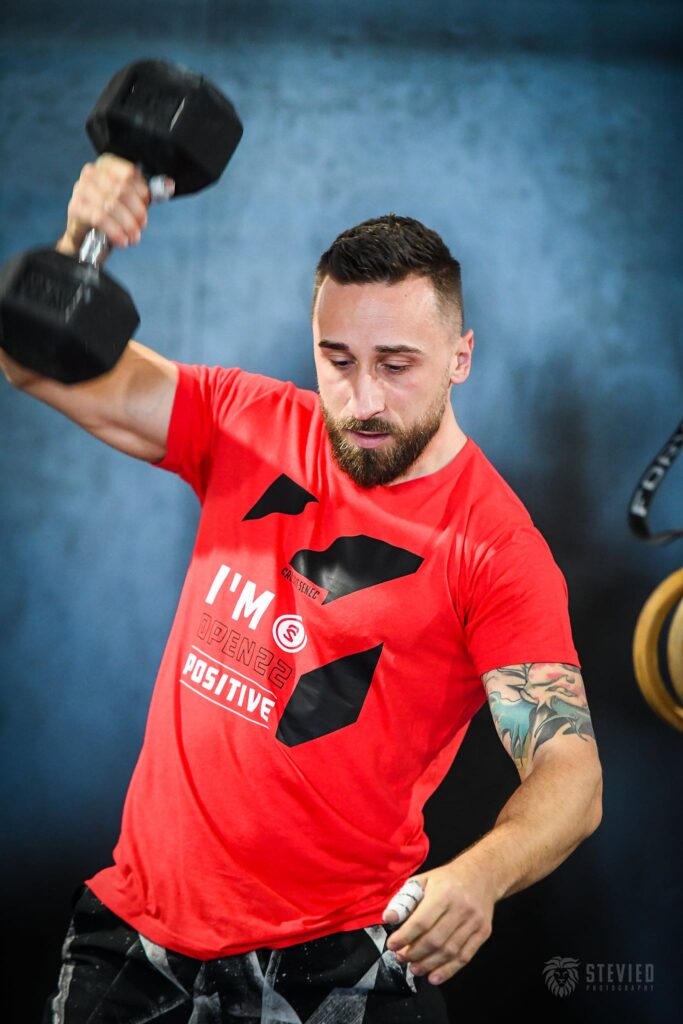
From measurable improvements in cardiovascular health to powerful psychological benefits and long-term resilience, participating in a structured, high-intensity functional fitness competition like the CrossFit Open can deliver outcomes that are strongly supported by research.
Here are five science-backed reasons why signing up for the 2026 CrossFit Open might be one of the best decisions you make next year.
1. It Forces You to Train With Greater Intensity — and Intensity Drives Results
One of the defining features of the CrossFit Open is urgency. You have a deadline. You have a score. You know others are watching. That alone changes how you perform.
And intensity matters more than most people realize.
High-Intensity Functional Training Improves VO2 Max
High-intensity functional training (HIFT), the model on which CrossFit is built, has been shown to significantly improve aerobic capacity. A systematic review by Feito et al. (2018) found that HIFT programs consistently improve VO2 max, a key marker of cardiovascular health and longevity.
VO2 max is not just about performance. It is one of the strongest predictors of all-cause mortality. Higher cardiorespiratory fitness is associated with lower risk of cardiovascular disease and premature death (Blair et al., 1996).
In practical terms: when you push hard during Open workouts, you are not just chasing a better ranking. You are improving a physiological variable strongly linked to living longer.
Intensity Increases Mitochondrial Adaptation
Short bursts of intense effort stimulate mitochondrial biogenesis — the process of creating new mitochondria in muscle cells. Research by Gibala et al. (2006) demonstrated that sprint interval training produces similar mitochondrial adaptations to traditional endurance training, but in significantly less time.
The Open often demands repeated high-intensity efforts under fatigue. That kind of stimulus is exactly what drives mitochondrial efficiency — and better energy production means better performance and metabolic health.
Competition Enhances Output
Research in sport psychology shows that people perform better in competitive settings. Corbett et al. (2012) found that cyclists produced significantly greater power output when competing against others compared to training alone.
The Open creates a global competitive environment. Even if you are not aiming for Semifinals, the leaderboard and gym atmosphere elevate effort levels. That increased effort translates directly into greater physiological adaptation.
When you sign up for the Open, you are not just registering for workouts. You are creating an environment that pushes you to train harder than you otherwise would — and the science is clear: higher intensity, when programmed appropriately, drives meaningful improvement.
2. It Builds Mental Toughness and Stress Resilience
Physical stress is obvious during an Open workout. What is less obvious is how that stress can improve your psychological resilience.
Exposure to Controlled Stress Builds Resilience
The concept of stress inoculation suggests that exposure to manageable stressors improves the ability to cope with future stress (Meichenbaum, 2007). When you voluntarily step into a challenging workout with a ticking clock and judging standards, you are practicing composure under pressure.
This matters beyond the gym.
Research shows that individuals who regularly engage in physically demanding activity report better stress regulation and lower perceived stress (Gerber et al., 2013). The physiological stress of high-intensity exercise may enhance adaptability in the hypothalamic-pituitary-adrenal (HPA) axis, which regulates stress responses.
Each Open workout becomes a structured opportunity to practice staying calm under fatigue and discomfort.
Exercise Reduces Anxiety and Depression
A large meta-analysis by Schuch et al. (2016) found that exercise significantly reduces symptoms of depression. Similarly, regular physical activity is associated with lower levels of anxiety (Stubbs et al., 2017).
The Open adds goal-setting, accountability, and social support to your regular training — factors known to further improve psychological outcomes.
Growth Through Challenge
Psychological research on self-efficacy shows that mastery experiences — successfully completing difficult tasks — are the most powerful source of confidence (Bandura, 1997).
When you complete an Open workout that initially seemed impossible, you expand your belief in your own capacity. That belief carries into work, relationships, and other areas of life.
The Open is not just a physical test. It is structured adversity. And structured adversity, when chosen voluntarily, builds durable confidence.
3. It Strengthens Community and Social Connection
Humans are social creatures. Strong social ties are one of the most consistent predictors of long-term health.
Social Connection Predicts Longevity
A landmark meta-analysis by Holt-Lunstad et al. (2010) found that individuals with strong social relationships have a 50 percent greater likelihood of survival compared to those with weaker connections.
That effect size rivals smoking cessation and exceeds many other health interventions.
Participating in the Open strengthens gym bonds. Friday Night Lights events, shared suffering, cheering for others — these experiences deepen relationships.
Group Training Improves Adherence
One of the biggest barriers to long-term fitness is consistency. Research shows that group-based exercise improves adherence compared to exercising alone (Burke et al., 2006).
When you sign up for the Open, you increase accountability. You are more likely to show up, more likely to push, and more likely to stay consistent through the season.
Consistency, more than any single workout, drives long-term adaptation.
Shared Goals Increase Motivation
Social identity theory suggests that people are more motivated when they identify strongly with a group (Tajfel and Turner, 1979). The Open creates a shared mission within affiliates worldwide.
When your gym rallies around a weekly test, you are no longer just an individual exercising. You are part of a team.
And belonging improves both motivation and well-being.
4. It Encourages Balanced, Well-Rounded Fitness
The Open tests multiple domains: strength, power, endurance, gymnastics skill, and metabolic conditioning. Preparing for it requires comprehensive training.
That variety is not random. It aligns closely with what research identifies as key components of long-term health.
Strength Training Protects Against Mortality
Resistance training is associated with reduced risk of all-cause mortality (Saeidifard et al., 2019). Muscle mass is also inversely associated with mortality risk, particularly in older adults (Srikanthan and Karlamangla, 2014).
Open preparation includes barbell work, bodyweight strength, and loaded movements. Training across these domains builds muscle mass and neuromuscular efficiency.
Power Matters for Aging
Muscle power declines earlier and faster than strength and is strongly associated with functional independence (Skelton et al., 1994). Olympic lifts, box jumps, and dynamic movements — staples of the Open — train power output.
Power training has been shown to improve functional performance in adults and older populations (de Vos et al., 2005).
Even if you are in your 20s or 30s, building power now lays a foundation for long-term function.
Mixed-Modal Training Improves Metabolic Health
High-intensity mixed-modal training improves insulin sensitivity and body composition (Wewege et al., 2017). Improved insulin sensitivity reduces risk of type 2 diabetes and cardiovascular disease.

The constantly varied format of Open-style workouts challenges multiple energy systems and muscle groups. This variability promotes comprehensive metabolic adaptation.
Training for the Open pushes you toward balanced fitness — not just being strong, not just being fast, but being capable across domains that matter for health and performance.
5. It Gives You Objective Feedback and a Clear Benchmark
Progress requires measurement.
The Open provides standardized workouts that allow year-to-year comparison — something most recreational exercisers never experience.
Goal Setting Improves Performance
Research shows that specific, challenging goals improve performance more than vague or easy goals (Locke and Latham, 2002).
Registering for the Open creates a defined performance target. You know the test is coming. That clarity shapes training focus and intent.
Feedback Enhances Skill Acquisition
Motor learning research demonstrates that feedback improves performance and accelerates skill development (Schmidt and Lee, 2011). The Open provides immediate, quantifiable feedback in the form of scores and rankings.
Even if you finish in the 60th percentile, you now have a benchmark.
Tracking Progress Increases Motivation
Self-determination theory highlights competence as a core psychological need (Deci and Ryan, 2000). Seeing measurable improvement satisfies that need and reinforces intrinsic motivation.
When you compare your 2026 scores to previous years, you are not just comparing numbers. You are observing adaptation.
Objective measurement transforms training from random effort into a meaningful progression.
The Bigger Picture: Why the Open Matters Beyond Competition
The CrossFit Open is often framed as a competition. But for most participants, it is something deeper.
It is a structured period of heightened intensity.
It is a stress-resilience training ground.
It is a community event.
It is a comprehensive fitness assessment.
It is a benchmark for growth.
The scientific literature strongly supports the pillars on which the Open stands:
• High-intensity training improves cardiovascular fitness and metabolic health.
• Resistance training reduces mortality risk.
• Social connection improves longevity.
• Structured challenges enhance mental resilience.
• Measurable goals improve performance and motivation.
When you sign up for the 2026 CrossFit Open, you are not just chasing leaderboard placement. You are participating in a format that aligns remarkably well with what research identifies as optimal for long-term health and human performance.
You do not need to win your division.
You do not need to qualify for the next stage.
You simply need to show up and test yourself.
And from a scientific perspective, that alone makes it worth it.
Conclusion
If you are on the fence about registering for the 2026 CrossFit Open, consider this:
It will likely push you harder than you push yourself alone.
It will expose you to controlled stress that builds resilience.
It will deepen your connection to your gym community.
It will require you to develop balanced, functional fitness.
It will provide objective benchmarks that guide long-term progress.
All of those outcomes are supported by decades of research in exercise physiology, psychology, and public health.
And that is exactly why you should sign up.
References
• Bandura, A. (1997) Self-efficacy: The exercise of control. New York: Freeman.
• Blair, S.N., Kampert, J.B., Kohl, H.W. et al. (1996) ‘Influences of cardiorespiratory fitness and other precursors on cardiovascular disease and all-cause mortality in men and women’, Journal of the American Medical Association, 276(3), pp. 205–210.
• Burke, S.M., Carron, A.V. and Eys, M.A. (2006) ‘Physical activity context and social influence on adherence in structured exercise programs’, Psychology of Sport and Exercise, 7(6), pp. 583–596.
• Corbett, J., Barwood, M. and Ouzounoglou, A. (2012) ‘Influence of competition on performance and pacing during cycling exercise’, Medicine & Science in Sports & Exercise, 44(3), pp. 509–515.
• Deci, E.L. and Ryan, R.M. (2000) ‘The “what” and “why” of goal pursuits: Human needs and the self-determination of behavior’, Psychological Inquiry, 11(4), pp. 227–268.
• de Vos, N.J., Singh, N.A., Ross, D.A. et al. (2005) ‘Optimal load for increasing muscle power during explosive resistance training in older adults’, The Journals of Gerontology Series A: Biological Sciences and Medical Sciences, 60(5), pp. 638–647.
link