
Article Content
A new peer-reviewed study led by scientists at the Perception Dynamics Institute and the University of California San Diego demonstrates that a specific visual training program significantly outperforms standard programs designed to treat cognitive problems following a concussion.
The research, published in Frontiers in Human Neuroscience, reveals that a technique called Perceptual Attention Therapy (PATH) produces rapid improvements in reading, attention, memory and executive function.
“This study represents a paradigm shift in how we can effectively approach concussion rehabilitation,” said Teri Lawton, Ph.D., lead author and founder of the Perception Dynamics Institute. “By targeting foundational visual timing deficits — specifically motion discrimination at low levels of cognitive processing — we can dramatically improve higher-level cognitive functions.”
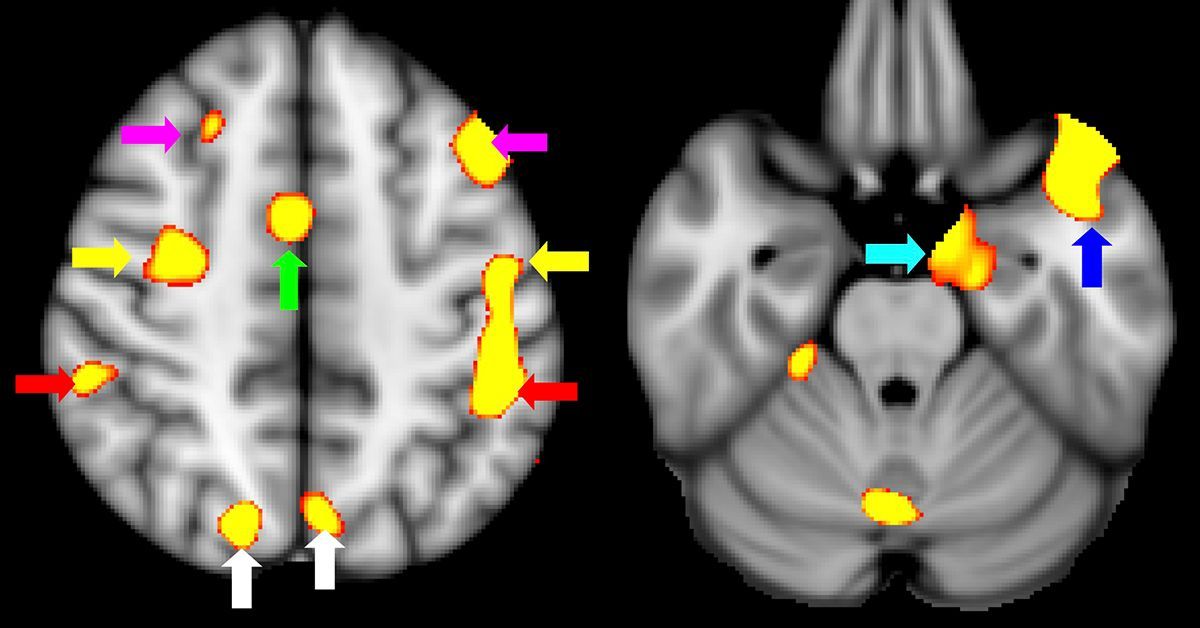
Mingxiong Huang, Ph.D., co-director of the MEG (Magnetoencephalography) Center at the UC San Diego Qualcomm Institute and senior author of the study, added, “The MEG functional brain imaging at our facility allowed us to see, in high-resolution in space and time, how the brain’s working-memory and attention networks reorganized after training. We could detect strengthened responses in many brain regions and confirm that the behavioral improvements reflected true functional recovery.”
Mild traumatic brain injury affects millions of Americans annually, with many experiencing persistent problems with concentration, memory and information processing that can last months or years. Current rehabilitation approaches often provide limited relief, leaving patients frustrated and unable to return to normal activities.
Comparing Three Approaches
PATH Neurotraining combines specialized eye-brain exercises that target movement discrimination—a function controlled by the dorsal visual pathways—with targeted working memory exercises. This two-stage approach addresses the underlying visual timing deficits before strengthening specific cognitive skills. These pathways are particularly vulnerable to concussion.
The research team compared three interventions for concussion-related attention, memory and thinking problems: PATH training; training targeting ventral (rather than dorsal) visual pathways; and working memory training. PATH demonstrated superior outcomes across multiple cognitive domains.